
Understanding Keratoconus
Imagine looking through a window that slowly becomes warped and uneven. Straight lines appear bent, lights become scattered, and everyday tasks like reading or driving become increasingly challenging. This is often how people with keratoconus describe their vision.
Keratoconus is a progressive eye condition that affects the cornea—the clear, dome-shaped front surface of the eye. As the cornea gradually thins and bulges outward into a cone-like shape, it causes irregular astigmatism and distorted vision.
What Causes Keratoconus?
The exact cause of keratoconus remains unclear, but researchers believe genetics, environmental factors, and eye-rubbing habits all play a role.
Common risk factors include:
- Family history of keratoconus
- Chronic eye rubbing
- Allergies and eczema
- Connective tissue disorders
- Certain genetic conditions
Studies suggest that keratoconus affects approximately 1 in 2,000 people worldwide and often begins during adolescence or early adulthood.
Can Keratoconus Be Cured or Reversed?
This is one of the most frequently searched questions online.
The honest answer is no, keratoconus cannot currently be completely cured or reversed. However, modern keratoconus treatment options in 2026 can successfully stabilize the condition, improve vision, and significantly reduce the risk of severe progression.
Think of keratoconus like a crack forming in a road. While the road may not return to its original condition, advanced repair techniques can stop the damage from worsening and restore smoother function.
Why Early Diagnosis Matters
Keratoconus is progressive, meaning it tends to worsen over time if left untreated.
Early diagnosis offers several benefits:
- Better treatment outcomes
- Reduced risk of severe corneal distortion
- Improved long-term vision preservation
- Lower likelihood of requiring corneal transplantation
This is why regular eye examinations are essential, especially for younger individuals experiencing rapidly changing prescriptions.
Common Symptoms of Keratoconus
Blurred and Distorted Vision
Objects may appear stretched, doubled, or warped.
Increased Light Sensitivity
Bright lights can become uncomfortable and create glare.
Frequent Prescription Changes
Patients often notice that their glasses prescription changes frequently.
Double Vision in One Eye
Monocular double vision is a classic symptom of progressive keratoconus.
How Keratoconus Is Diagnosed
Modern technology allows ophthalmologists to detect keratoconus at very early stages.
Diagnostic tests may include:
- Corneal topography
- Corneal tomography
- Pachymetry (corneal thickness measurement)
- Visual acuity testing
- Refraction assessment
These advanced imaging tools help determine the severity and progression of the condition.
Keratoconus Treatment Options 2026
The landscape of keratoconus management has evolved dramatically over the last decade.
Prescription Glasses
In early stages, glasses may effectively correct mild visual distortion.
Specialty Contact Lenses
Many patients benefit from:
- Rigid gas permeable lenses
- Hybrid lenses
- Scleral lenses
- Custom-designed keratoconus lenses
These lenses help create a smoother optical surface for improved vision.
Corneal Cross-Linking (CXL)
Corneal cross-linking remains the gold standard treatment for progressive keratoconus.
The procedure uses riboflavin (vitamin B2) and ultraviolet light to strengthen corneal collagen fibers, helping stop further progression.
According to the Johns Hopkins Medicine Keratoconus Resource cross-linking is specifically designed to stabilize keratoconus rather than completely reverse it.
Epithelium-On Cross-Linking
One of the most exciting developments in the latest keratoconus treatments 2026 is epithelium-on cross-linking.
This newer approach aims to preserve the corneal surface while delivering effective stabilization with potentially faster recovery.
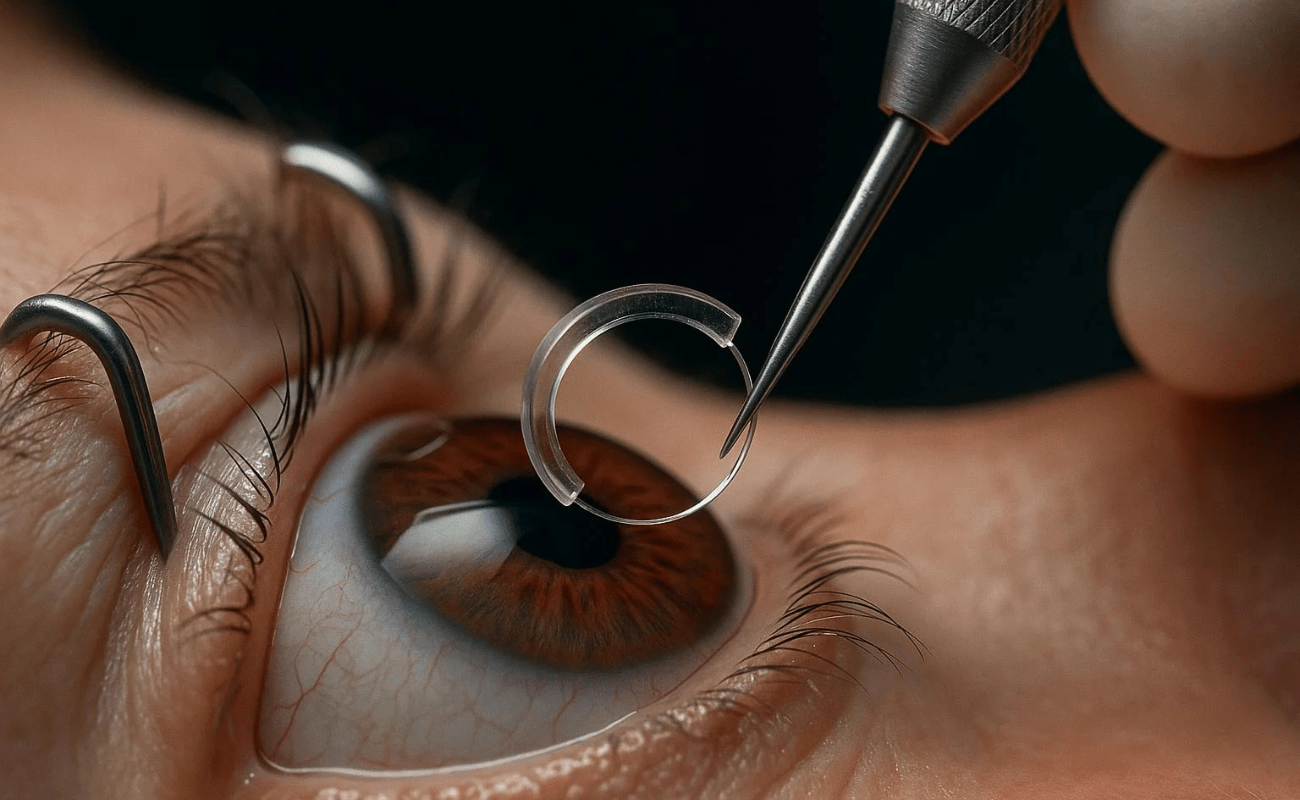
Intracorneal Ring Segments (ICRS)
Small crescent-shaped implants can be inserted into the cornea to:
- Improve corneal shape
- Reduce irregular astigmatism
- Enhance vision quality
ICRS may be combined with cross-linking for selected patients.
Corneal Transplantation
For advanced cases where significant scarring or severe thinning occurs, corneal transplantation may still be necessary.
Fortunately, modern treatments have reduced the need for corneal transplants compared to previous decades.
Latest Advances in Keratoconus Treatment in 2026
The field of keratoconus management continues to evolve rapidly.
Recent innovations include:
- Epithelium-on cross-linking technologies
- Customized cross-linking protocols
- Enhanced corneal imaging systems
- Combined cross-linking and refractive procedures
- Emerging regenerative corneal therapies
Recent developments highlighted by the FDA approval announcement for Epioxa suggest that incision-free treatment options may further expand future care possibilities.
Is Corneal Cross-Linking a Permanent Solution?
For many patients, corneal cross-linking provides long-term stabilization.
However, outcomes depend on:
- Age at treatment
- Disease severity
- Corneal thickness
- Individual healing response
Regular follow-up examinations remain important after treatment.
Who Is a Good Candidate for Keratoconus Treatment?
You may benefit from treatment if:
- Your keratoconus is progressing
- Your prescription changes frequently
- Corneal topography shows worsening shape changes
- Vision is becoming increasingly distorted
A comprehensive evaluation helps determine the most appropriate treatment plan.
Living Successfully With Keratoconus
Many patients continue to enjoy active, productive lives after diagnosis.
Helpful strategies include:
- Following treatment recommendations
- Avoiding eye rubbing
- Attending regular eye examinations
- Protecting eyes from excessive irritation
- Using prescribed vision correction devices
With proper management, most individuals maintain functional vision for many years.
Take the Next Step Toward Clearer Vision
If you’re experiencing distorted vision, frequent prescription changes, or have been diagnosed with keratoconus, early intervention can make a significant difference.
Modern keratoconus treatment options 2026 offer more possibilities than ever before to stabilize the condition and preserve long-term vision.
Schedule a consultation today to explore the most suitable treatment approach for your eyes.
Why Choose Dr. Amit Jain for Keratoconus Treatment in Dubai?
Choosing an experienced ophthalmologist is essential when managing a progressive corneal condition.
Patients trust Dr. Amit Jain because of:
- Advanced corneal diagnostic technology
- Personalized treatment planning
- Expertise in modern keratoconus management
- Comprehensive follow-up care
- Patient-centered approach
Explore advanced care from a trusted Keratoconus Specialist in Dubai
Whether you’re searching for keratoconus in dubai, advanced corneal imaging, or specialized treatment options, expert evaluation can help protect your vision for the future.
FAQs
Q1. Can keratoconus go away on its own?
No. Keratoconus does not typically resolve without treatment.
Q2. Can keratoconus be reversed naturally?
There is currently no proven natural method to reverse keratoconus.
Q3. Does corneal cross-linking improve vision?
Its primary goal is to stop progression, although some patients experience visual improvement.
Q4. Are contact lenses still needed after cross-linking?
Some patients may still require glasses or specialty contact lenses.
Q5. Is keratoconus hereditary?
Yes. Genetics play a significant role in many cases.
Conclusion
So, can keratoconus be cured or reversed? Current medical science says no—but that’s far from the end of the story.
Thanks to advancements in keratoconus treatment options 2026, patients now have access to highly effective solutions that can slow progression, stabilize the cornea, and preserve vision. From corneal cross-linking and specialty contact lenses to innovative emerging therapies, the future of keratoconus care continues to improve.
Early diagnosis remains the key. If you’re noticing symptoms or have recently been diagnosed, seeking expert care can help you maintain clearer, healthier vision for years to come.